

Natural Stone Veneer vs. Manufactured Stone: What's the Difference?
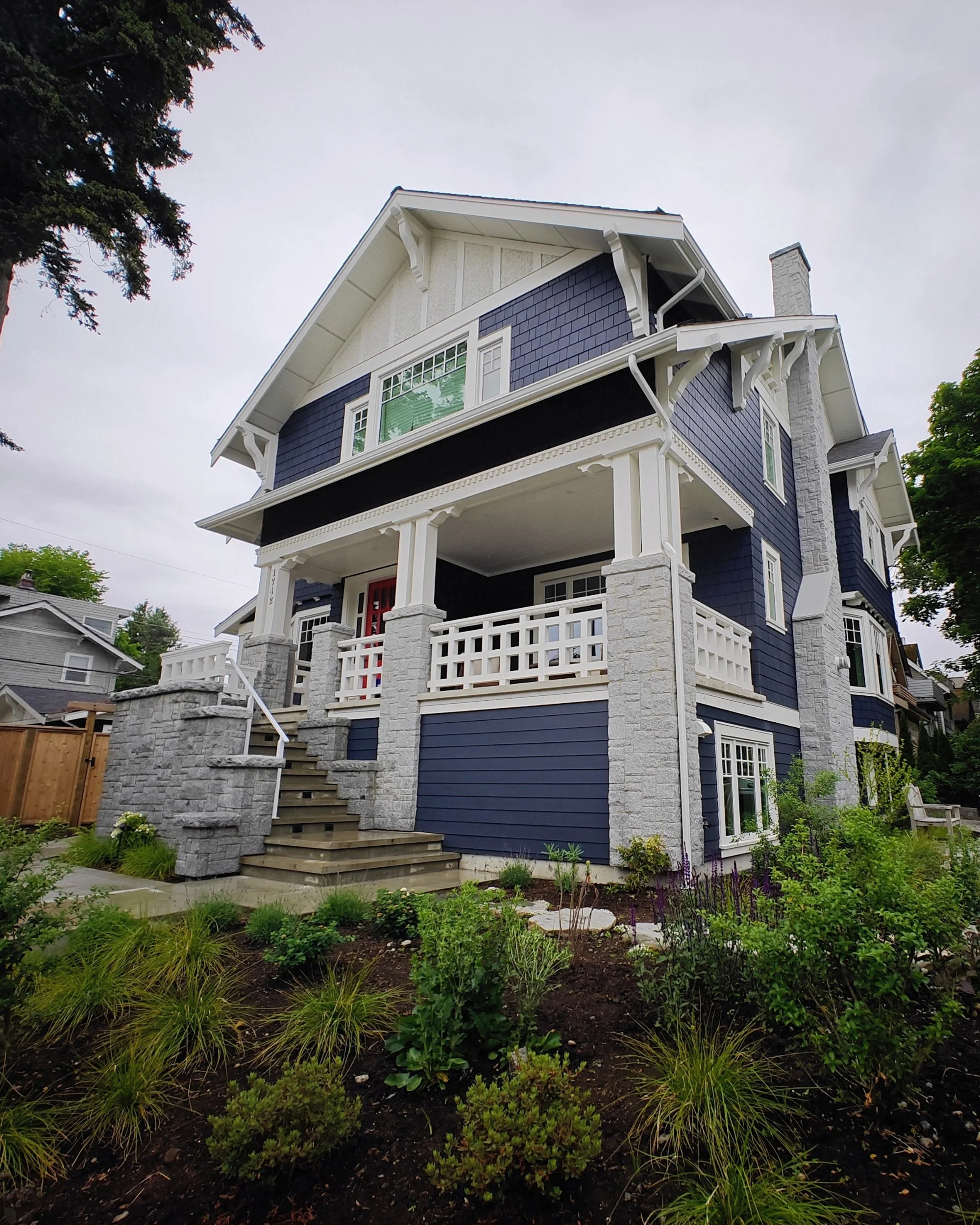
Natural granite stone veneer on a custom home in Kitsilano, Vancouver.
Stone veneer is used to add texture, depth and architectural character to exterior walls, chimneys, columns, entries and landscape features. For homeowners and design professionals, the choice often comes down to two materials: natural stone veneer and manufactured, or cultured, stone.
Both can produce an attractive finished wall. Both can be appropriate in the right application. The important difference is understanding what each material is made from, how it behaves over time and how much the installation contributes to the final result.
For projects in Vancouver, the North Shore and the Sea to Sky Corridor, material selection should be considered alongside moisture management, substrate preparation, detailing and craftsmanship.
What Is Natural Stone Veneer?
Natural stone veneer is made from quarried stone that has been cut or split into thinner pieces for use as cladding. Depending on the stone and product, it may be sawn, sawn-and-honed, split-faced or otherwise finished to create a specific texture and profile.
Common natural stone types include:
Granite
Quartzite
Limestone
Sandstone
Slate
Basalt
Fieldstone
Natural thin veneer is substantially shallower than full-bed stone, which helps reduce weight while retaining the colour and character of genuine stone. Exact thickness and weight vary by stone type, finish and product. Full-bed facing uses deeper pieces and can create a more substantial masonry appearance, but it may involve different structural and installation considerations.
The important point is that natural veneer is real stone throughout. Its colour, mineral pattern and texture are inherent to the material rather than applied as a surface coating.
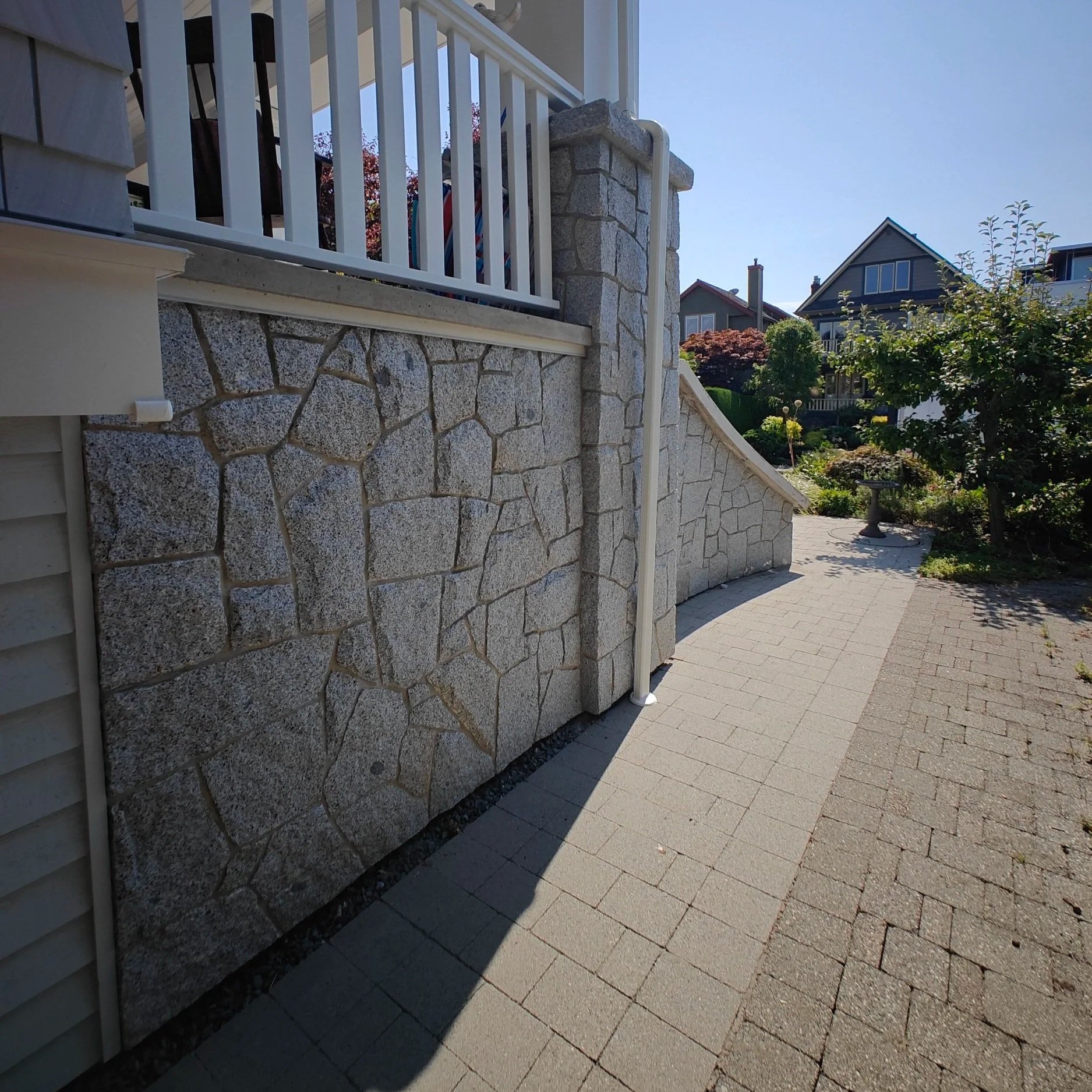
Granite veneer detail showing natural stone pattern and mortar joints.
What Is Manufactured Stone?
Manufactured stone veneer is a cement-based product designed to replicate the appearance of natural stone. It is commonly made from cement, lightweight aggregates, sand and mineral pigments. Moulds are used to create individual units with particular shapes, textures and profiles.
The quality of manufactured stone has improved significantly. Many products can provide a convincing stone appearance, especially when viewed from a distance or used in a suitable architectural application. It is available in a broad range of colours, sizes and styles.
Manufactured stone can make sense when:
A lighter cladding material is preferred.
A consistent colour or profile is important.
The project has a tighter material budget.
Standardized pieces will simplify layout.
The design calls for a particular replicated stone style.
The product is being used in a focused renovation or feature area.
Manufactured stone is not automatically an inferior choice. It is a different material with different strengths. The product must still be appropriate for the intended exterior application, and the wall assembly must be prepared and detailed correctly.
Appearance And Variation
Natural stone has geological variation. No two pieces are exactly alike, even when they come from the same quarry or product line. Colour, grain, surface texture, edges and thickness can change from one piece to the next.
That variation is one of the main reasons natural stone is selected for premium custom homes. It gives the finished masonry depth and authenticity. The wall does not look like it was assembled from a repeating set of identical moulds.
Manufactured stone offers more control. Its colour, dimensions and texture are usually more consistent. That can be helpful when a project needs a uniform appearance or when the design depends on predictable courses and repeatable units.
The trade-off is that manufactured pieces can display repeating shapes or textures if they are not blended carefully. Good layout remains important. The installer should work from multiple boxes or pallets, mix colours and sizes, and avoid placing similar units beside one another.
A manufactured product can look artificial when the pattern is too repetitive. Natural stone can look poorly executed when its variation is not organized into a balanced composition. In both cases, installation quality matters.
Corners, Transitions And Mortar Joints
The broad wall area is only one part of a veneer installation. Corners, openings and transitions often determine whether the work looks convincing.
Corners can be handled with purpose-made corner units, selected stones that return around the corner, or carefully cut pieces. Natural stone corners require individual selection and fitting. Manufactured stone systems often include matching corner pieces, but these still need to be installed with attention to pattern and repetition.
Transitions also require planning. Stone may meet:
Siding
Stucco
Brick
Concrete
Wood trim
Windows and doors
Rooflines
Caps and sills
Landscape walls or paving
The transition should look intentional and allow the surrounding materials to perform properly. A veneer should not simply stop wherever the installer runs out of wall space. It should terminate at a logical architectural line, with appropriate flashing, trim, sealant or coping details where required by the assembly.
Mortar joints change the character of the entire installation. A tight joint can create a more refined, contemporary appearance. A wider or more heavily tooled joint may suit a traditional or rustic design. Mortar colour also affects how the stone is perceived. A contrasting mortar can emphasize each individual unit, while a closer colour can make the wall read as a more continuous surface.
Even a dry-stack appearance is not an absence of installation detail. The stones must be selected, supported and positioned so the joints remain visually balanced and the wall does not develop distracting seams.
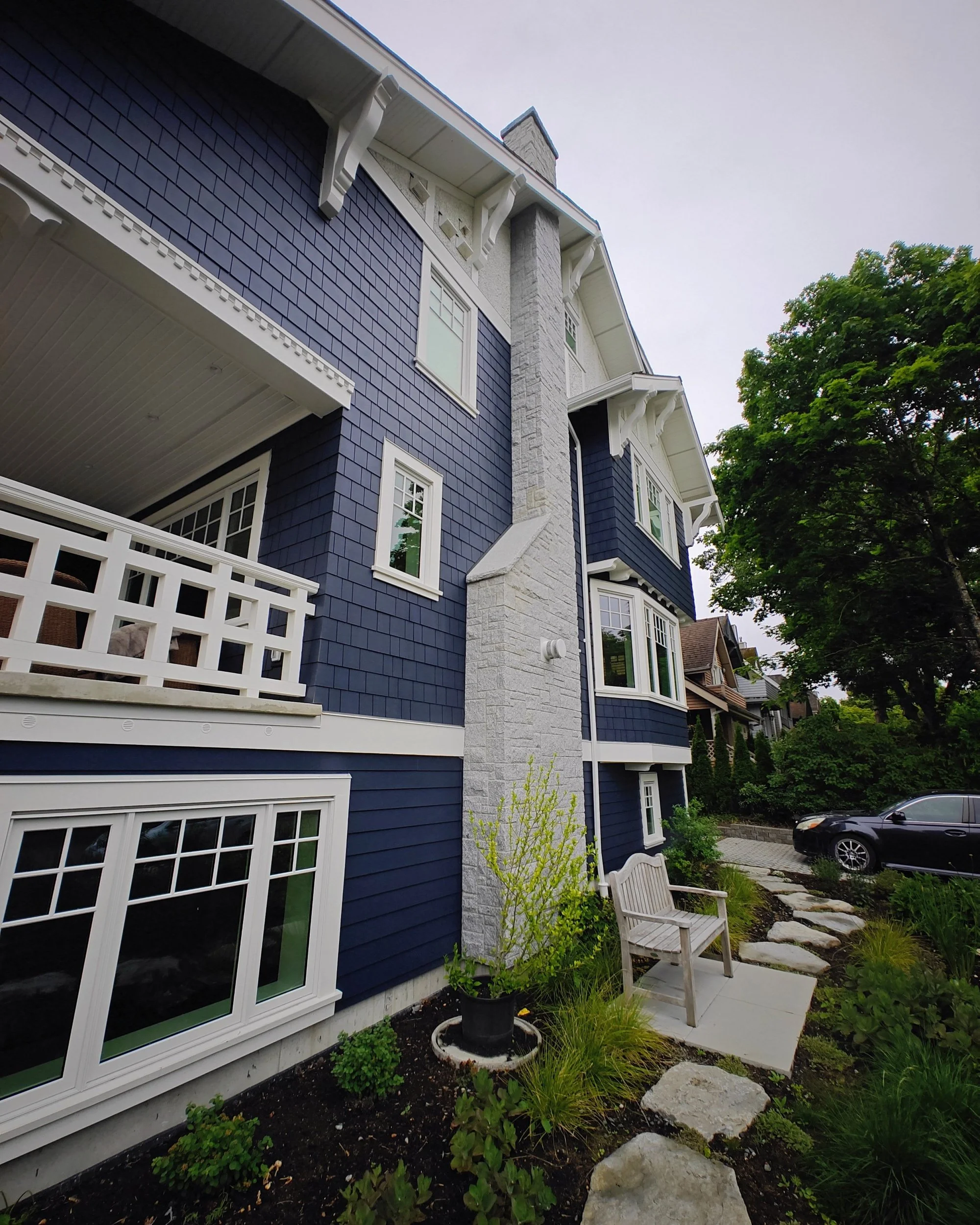
Full-height granite chimney integrated into a custom Craftsman home.
Installation Considerations
Natural and manufactured veneer systems can use different installation methods. The appropriate approach depends on the existing wall assembly, substrate, exposure, product requirements and project design.
Exterior veneer work may involve preparation such as:
Evaluating the substrate
Managing moisture behind the cladding
Installing the appropriate lath or support system where required
Applying a scratch coat where applicable
Selecting compatible mortar
Establishing proper coverage behind each stone
Detailing penetrations, openings and transitions
These details should not be assumed from the appearance of the finished stone. A natural stone veneer and a manufactured veneer may require different handling, but neither should be treated as a simple decorative layer applied to any wall.
Natural stone generally requires more individual fitting. Pieces may need to be sorted, cut, turned and positioned to create a balanced pattern. That additional labour is part of what creates the finished character.
Manufactured stone is often more predictable in size and easier to handle. That can simplify some layouts, but it does not eliminate the need for an experienced installer. Repetitive placement, visible mould lines, poorly treated corners or inconsistent joints can reduce the quality of the finished work.
A capable masonry contractor understands both the material and the building it is being installed on.
Durability And Maintenance
Natural stone is valued for its long-term durability and colour stability. Because the colour and texture are part of the stone itself, minor chips or cuts generally remain visually consistent with the surrounding material. The surface is not dependent on a thin layer of pigment to create its appearance.
Manufactured stone can also provide long service when the product is suitable for the application and installed correctly. However, damage may reveal the lighter concrete body beneath the surface. Some products may also show more noticeable staining, efflorescence or colour change depending on exposure, moisture and maintenance.
Neither material eliminates the need for good water management. In Greater Vancouver’s wet coastal climate, water must be directed away from vulnerable transitions and prevented from becoming trapped behind the veneer. Poor detailing can create problems regardless of whether the wall is clad in natural or manufactured stone.
Routine maintenance usually involves inspection, gentle cleaning and attention to damaged joints or loose units. Harsh cleaning methods and aggressive pressure washing can damage mortar and some stone surfaces. Maintenance requirements should be considered alongside the specific product and installation system.
Cost Considerations
Manufactured stone generally has a lower material cost than natural stone. Its lighter weight and standardized units may also reduce handling or installation time in some applications.
Natural stone usually carries a material premium. It may also require more labour because each piece must be selected and fitted. However, the installed cost cannot be judged by material price alone. The design, number of corners, access, wall height, openings, joint style and substrate preparation can affect the total significantly.
A small, highly detailed natural stone entry may require more labour per square metre than a larger, straightforward wall. A manufactured stone installation with many corners and transitions may also become labour intensive.
Pricing can vary significantly depending on the stone selection, wall assembly, project complexity and site conditions. For projects in Greater Vancouver, assessing the complete masonry scope provides a much more accurate picture of cost than relying on a generic square-foot price. The complete masonry package matters more than the material price in isolation.
Why Natural Stone Suits Custom Homes
Natural stone is often selected for premium custom homes because it offers qualities that are difficult to reproduce:
Authentic geological variation
Natural colour depth
Distinctive texture
Strong architectural presence
Long-term visual character
A direct connection to the surrounding landscape
It is particularly effective when the masonry is carried through several parts of the property. A stone selection can connect the chimney, entry columns, foundation, retaining walls, steps and outdoor living areas into one cohesive design.
The Kitsilano Craftsman granite veneer project is an example of this approach. The stonework was used across the chimney, columns, feature walls and custom caps so the masonry felt integrated with the architecture rather than added as an isolated accent.
That does not mean every home requires natural stone. Manufactured stone may be the right choice where consistency, weight, budget or a particular profile is the priority. The best material is the one that suits the building, design intent and expected performance.
Choose The Material And Installer
Natural stone veneer and manufactured stone can both succeed when they are selected thoughtfully and installed as part of a complete wall system. The material affects the appearance, weight, variation and long-term character. The installer affects the layout, joints, corners, transitions and overall execution.
For a new exterior, renovation or custom home masonry package, review full-size samples where possible. Consider how the stone will meet siding, roofing, windows, paving and landscape elements. Then discuss the substrate, installation method and detailing with an experienced masonry contractor in Vancouver.
Goliath Stoneworks works with homeowners, builders, architects and designers throughout Greater Vancouver, the North Shore and the Sea to Sky Corridor. Contact us to discuss your stone veneer project and determine which material and installation approach best suit the property.
Built Proper. Set In Stone.