

What Builders Should Look for in a Masonry Contractor

Natural stone masonry integrated throughout a custom craftsman home exterior and landscape in Vancouver.
For a custom home or major renovation, masonry is rarely an isolated scope. Stone, brick, tile and hardscape elements meet the work of framers, window installers, roofers, waterproofing trades, landscapers and concrete crews. The quality of the finished result depends not only on the masonry itself, but also on how well that work is planned and coordinated.
Choosing a masonry contractor is therefore about more than comparing square-foot rates. Builders, architects and project managers need a trade partner who understands the drawings, identifies problems early and delivers consistent work through changing site conditions.
The following qualities are worth looking for when evaluating a masonry contractor in Vancouver, Greater Vancouver or the Sea to Sky Corridor.
Proven Craftsmanship
A portfolio should show more than attractive wide-angle photographs. Look closely at the details.
Inspect completed work for:
Consistent mortar joints.
Clean and properly formed corners.
Balanced stone placement.
Accurate cuts around openings.
Well-integrated caps, sills and transitions.
Proper alignment with adjacent materials.
A natural pattern without obvious repetition.
Stone masonry is installed one piece at a time. The individual decisions made during layout affect the appearance of the entire wall. A capable installer knows how to work with variation in size, thickness, colour and texture rather than forcing every piece into a rigid pattern.
When possible, review completed work in person or look through detailed project photography. A finished installation can appear convincing from a distance while revealing weak corners, awkward cuts or inconsistent joints when viewed closely.
A strong example is the Kitsilano Craftsman masonry project, where natural stone was carried across the chimney, columns, feature walls and custom caps. This type of project demonstrates why the masonry package should be considered as a complete architectural system rather than a collection of disconnected surfaces.
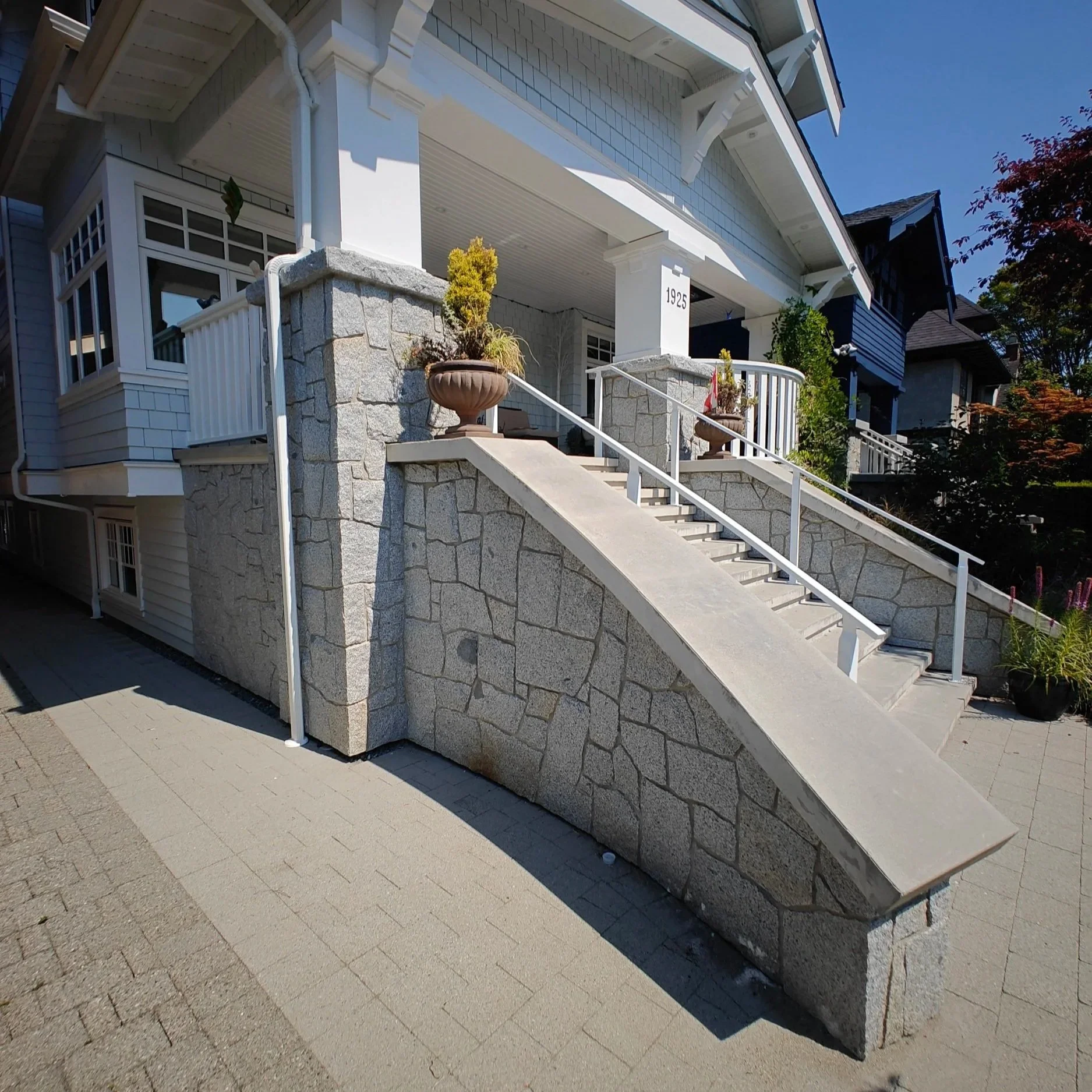
Close-up natural granite masonry on an exterior curved stair wall, showing stone layout, corner work and integration with surrounding hardscape.
Technical Knowledge
A masonry contractor should understand how the selected material performs and how it interacts with the building assembly.
That includes familiarity with:
Natural stone veneer and full-bed facing.
Brick and masonry units.
Exterior porcelain and natural stone tile.
Mortar-bed and thinset applications.
Dry stack and mortared wall construction.
Paving and hardscape base systems.
Concrete, masonry and framed substrates.
Drainage and moisture-management details.
The correct installation method depends on the wall or surface being built. A stone veneer installation over a suitable framed wall assembly is not approached in exactly the same way as stone installed over concrete, masonry or an exterior stair structure.
The contractor should be prepared to review existing conditions before work begins. Substrates may require cleaning, levelling, repair or other preparation. They should also identify concerns involving movement, moisture, access, structural support or incompatible materials.
Technical knowledge is especially important at building-envelope transitions. Masonry may meet windows, doors, siding, roofing, decks, railings and foundation walls. These junctions require coordination so that water-management layers, flashings, drainage paths and movement allowances are not compromised.
A contractor who only focuses on setting stone can miss issues that become expensive once the work is covered.
Ability to Read Drawings
Masonry details often appear across architectural, structural, landscape and envelope drawings. A qualified masonry subcontractor should be comfortable reviewing all of the information that affects their scope.
They should be able to understand:
Elevations and masonry layouts.
Wall sections and assembly details.
Opening dimensions.
Window and door interfaces.
Caps, sills and projecting elements.
Stair and landing details.
Control or movement-joint locations.
Transitions between masonry and other cladding materials.
Finish schedules and material specifications.
The best time to identify a conflict is before material arrives on site. For example, a stone column may need to align with framing, a roof overhang or a railing attachment. A veneer may require a specific termination at a window sill. A patio elevation may need to coordinate with door thresholds, drainage and landscape grades.
A masonry contractor should raise these questions early rather than improvising after the surrounding work is complete.
Clear Communication
Good communication reduces uncertainty for everyone on the project.
Before awarding the work, ask how the contractor handles:
Design questions.
Requests for information.
Material substitutions.
Site-condition changes.
Schedule updates.
Deficiencies.
Coordination with other trades.
Approval of samples or mock-ups.
The proposal should clearly define the masonry scope, included materials, preparation work, access assumptions and exclusions. Ambiguity at the beginning often becomes a disagreement later.
Communication also matters in the field. Masonry work may need to pause while waterproofing, framing, electrical, plumbing or exterior finishes are completed. A reliable contractor communicates what is ready, what is not ready and what is required before the crew can proceed.
That level of communication allows the builder to make informed scheduling decisions instead of discovering delays after the fact.
Scheduling and Trade Coordination
Masonry can affect several stages of a custom build. Material lead times, site access, scaffolding, substrate readiness and weather conditions all influence production.
A masonry contractor should be able to discuss:
When materials need to be selected and ordered.
When substrates must be ready.
Whether a mock-up or sample panel is appropriate.
How material will be stored and protected.
What access the crew requires.
How the work will be phased.
Which trades need to complete work first.
Which trades follow after masonry is complete.
Coordination is particularly important when masonry meets windows, roofing, siding, decks and landscape construction. The contractor should understand the sequence of those interfaces and communicate when a detail requires review.
Scheduling should be realistic. A contractor who promises an aggressive start without confirming material availability, site readiness or crew capacity may create more disruption than a contractor who provides a clear and achievable programme.
Understanding Substrates and Transitions
The visible stone is only one part of a veneer installation. The substrate and the layers behind the masonry affect the long-term result.
Before installation, the contractor should consider:
Whether the substrate is suitable for the selected system.
Whether the surface is sound, clean and properly prepared.
How moisture will move through or around the assembly.
Where flashing and drainage details occur.
How penetrations are sealed and finished.
How the masonry terminates at roofs, windows and doors.
How movement between different materials will be managed.
This does not mean the masonry contractor replaces the role of the architect, engineer or building-envelope consultant. It does mean they should understand their responsibility within the overall assembly and be willing to coordinate with the design team.
A contractor who identifies an unclear transition before installation can help prevent concealed problems, visible cracking and costly rework.
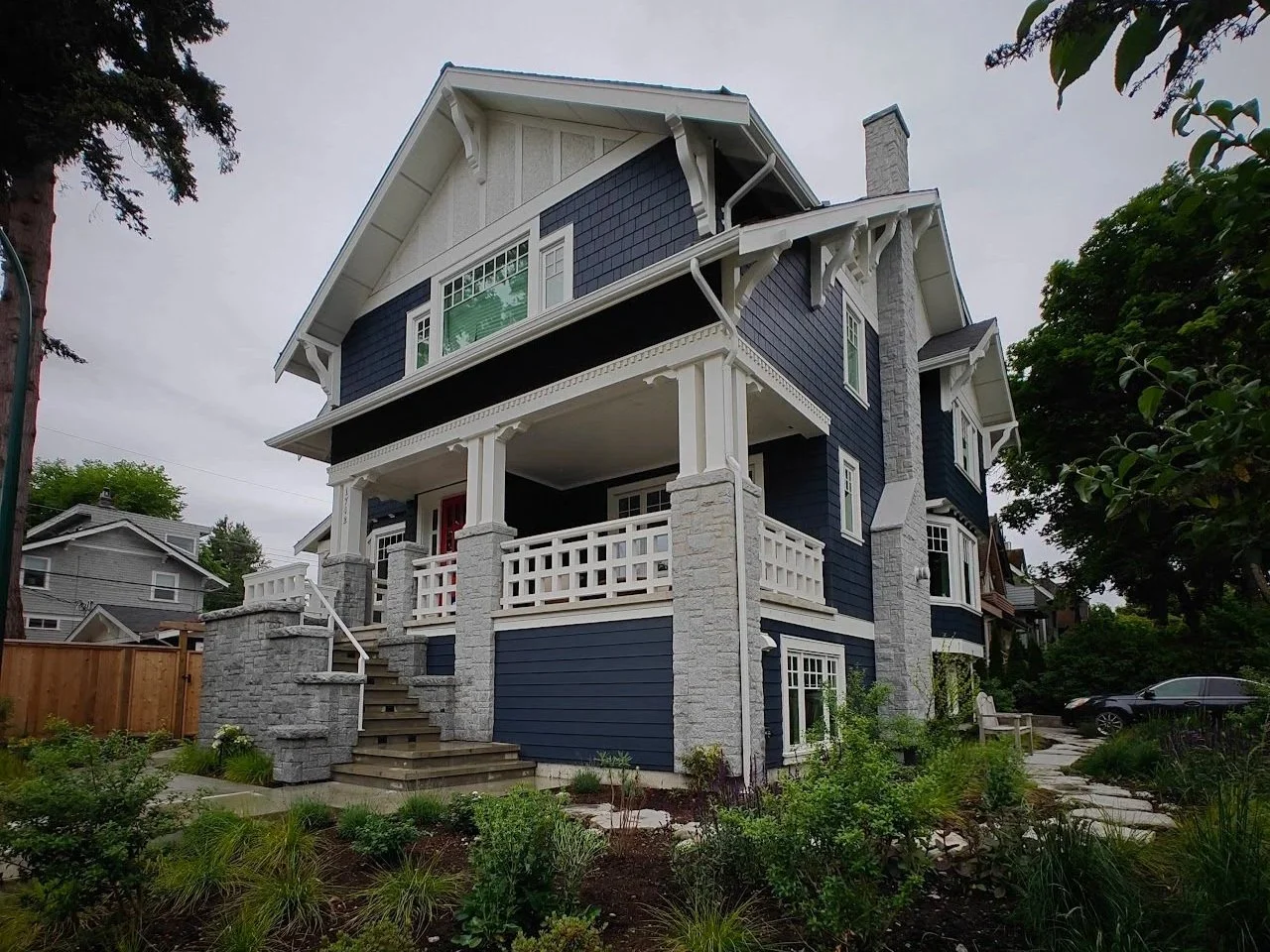
Natural granite masonry integrated throughout a Kitsilano custom home, including the full-height chimney, columns, stair walls and front entry.
Material Planning and Layout
Material planning affects both appearance and productivity.
Natural stone, in particular, requires thoughtful selection and staging. The contractor should understand the quantity of flats, corners, trim pieces, caps and other special elements required for the design. Corners should not be treated as an afterthought. They influence the depth, shadow lines and visual weight of the finished wall.
Good layout also considers:
The size and shape of individual stones.
Colour distribution.
Texture and face orientation.
Joint width.
Alignment with windows and doors.
Transitions between different stone formats.
The location of cuts and smaller pieces.
The goal is not to eliminate natural variation. It is to distribute that variation in a balanced way. Repetitive shapes, stacked joints or poorly placed cuts can make a premium material look ordinary.
The same principle applies to brick, porcelain and paving installations. Pattern, alignment and the relationship between the material and the surrounding architecture should be established before production moves too far ahead.
Site Cleanliness and Protection
Masonry is a demanding trade, but the site should still be managed professionally.
Look for a contractor who plans for:
Protection of finished surfaces.
Safe material storage.
Dust and debris control.
Clean mortar handling.
Protection of windows, doors and landscaping.
Removal of waste and excess materials.
Safe access around scaffolding and equipment.
Site cleanliness is not merely a cosmetic concern. Mortar, stone dust and cutting debris can damage adjacent finishes or create additional cleanup for other trades. A clean site also makes it easier to identify incomplete work, review details and maintain safe movement through the project.
Problem Solving
Construction rarely proceeds without changes. Existing conditions may differ from the drawings. A material may arrive with more variation than expected. A window, railing or downspout may need to be adjusted to suit the masonry.
A strong masonry contractor does not hide these issues or make unapproved changes. They explain the problem, outline practical options and identify the effect on appearance, schedule and scope.
Problem solving may involve:
Adjusting layout around an opening.
Revising a transition detail.
Coordinating a change with the designer.
Recommending a suitable material alternative.
Addressing an unsuitable substrate.
Sequencing work around another trade.
Determining whether a detail needs additional design review.
Builders benefit from a contractor who brings solutions instead of simply reporting obstacles.
Consistency Across the Project
A masonry package may extend from the front entry to the chimney, outdoor kitchen, retaining walls, patio and garden features. The work should feel cohesive across all of these areas.
Consistency includes:
Mortar colour and joint treatment.
Stone selection and orientation.
Corner detailing.
Cap and sill profiles.
Transitions to siding, wood and concrete.
Cleanliness of cuts.
Overall workmanship from one elevation to another.
Reviewing a contractor’s completed work across multiple project types can help reveal whether that consistency is present. One impressive feature wall does not necessarily demonstrate the ability to execute a complete custom home masonry package.
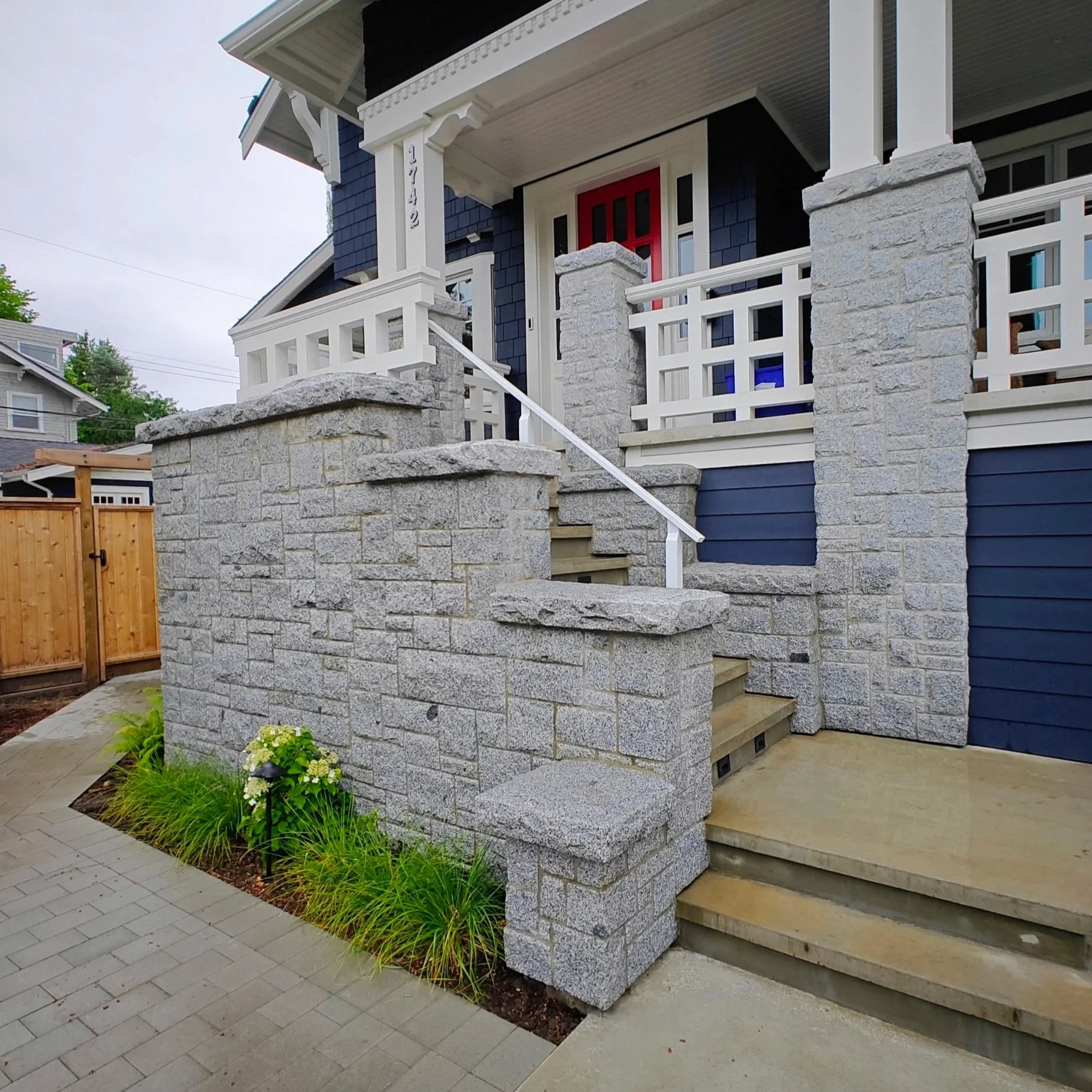
Detailed granite masonry at front entry, featuring custom stone stair walls, columns and granite caps integrated with the surrounding hardscape.
The Lowest Quote Is Not Always the Lowest Cost
Price matters, but the lowest masonry quote does not necessarily represent the lowest final project cost.
A lower initial number may exclude preparation, access requirements, corners, cuts, protection, coordination or other necessary work. Even when the scope appears comparable, deficiencies can lead to:
Rework.
Schedule delays.
Material waste.
Damage to adjacent finishes.
Additional supervision.
Disputes over exclusions.
Premature repairs.
The more useful comparison is between complete scopes of work. Builders should review what each contractor has included, what assumptions they have made and how they plan to manage the technical details.
Where pricing is discussed on masonry or hardscape projects in Greater Vancouver, it should be based on current local or British Columbia sources. Generic U.S. home-improvement cost guides are not a reliable reference for Vancouver BC conditions. If dependable local pricing cannot be verified, it is better to explain the factors that affect cost rather than publish broad numerical ranges that may mislead builders or homeowners.
A clear, detailed proposal may not be the cheapest document on the table. It can still provide better cost control by reducing surprises during construction.
A Practical Selection Checklist
Before hiring a masonry contractor, ask:
Can they show completed projects similar to yours?
Have they worked with the specified material and installation system?
Can they read and discuss the relevant drawings and details?
Do they understand substrates, moisture management and transitions?
Is the scope clearly written?
How will they coordinate with other trades?
What information do they need before ordering materials?
How do they manage changes and site conditions?
Will they protect adjacent work and maintain a clean site?
Can you inspect corners, caps, joints, cuts and transitions in their completed work?
For custom home builders and project teams, these questions provide a better evaluation framework than price alone.
Goliath Stoneworks works with custom builders, contractors, designers and homeowners throughout Greater Vancouver and the Sea to Sky Corridor. Our work includes natural stone veneer, architectural masonry, exterior tile, patios, retaining walls and integrated hardscape installations. We approach each project with attention to the material, the assembly and the details that connect masonry to the rest of the build.
Contact Goliath Stoneworks to discuss a masonry package where craftsmanship, coordination and execution are priorities.
Built Proper. Set In Stone.